South Korea discriminated against American company Coupang, U.S. House Committee says
South Korea is discriminating against Coupang and other U.S.-owned companies, a House Judiciary Committee report said, which could lead to economic losses of up to $525 billion for the U.S. over the next decade
South Korean authorities have repeatedly discriminated against the American company Coupang, violating its trade agreement, a Republican-led U.S. House Judiciary Committee report said.
The 35-page report titled, “Closed for Competition: South Korea's Discriminatory Attacks on American-owned Businesses” was released Wednesday. It follows a large-scale data breach at the e-commerce firm last year that triggered investigations which have become a flashpoint for the Seoul-Washington relationship.
This comes after Seoul's Personal Information Protection Commission (PIPC) slapped Coupang, an American-owned company operating in South Korea and known as the "Amazon of Asia," with a $410 million fine in June. Coupang has publicly stated that it will pursue judicial action in the Seoul Administrative Court.
The House report said this was the largest fine ever imposed, despite other data breaches that were arguably more severe. The report is the outcome of an investigation opened by the Committee in early February into Coupang and other U.S. companies, including “efforts by the South Korean government to target innovative American-owned companies and subject them to punitive obligations.”
“South Korea is an ally and partner – but the way it is targeting American businesses and even American citizens is not how friends treat each other,” Rep. Darrell Issa, R-Calif said in an X post on Wednesday following the Committee's report.
South Korean foreign ministry spokesperson Park Il rejected the report as one-sided on Thursday, saying that it only reflected Coupang's claims.
"The report unilaterally accepts Coupang's claims," Foreign Ministry spokesman Park Il said during a regular briefing, and said that Seoul would continue communicating with the House Judiciary Committee, Congress and the U.S. administration.
Raids, audits, and parliamentary inquiries
Kyungmi Kim, Second Secretary of the Embassy of the Republic of Korea in Washington, D.C. also wrote a statement to Just the News regarding the South Korean government’s position.
“The Coupang case concerns a serious personal data breach affecting at least 37.55 million individuals, which is an exceptionally high number considering that the Republic of Korea’s total population is around 51 million. The relevant Korean authorities have conducted investigations in accordance with applicable laws and due process,” the statement said.
Following the data breach, the South Korean government has responded with raids, audits, and parliamentary inquiries. President Lee Jae-myung also called for penalties so severe they could fear going out of business for Coupang and other companies violating data security laws on Dec. 2 of last year.
The report called the South Korean government’s actions a "campaign" against Coupang, citing dozens of unrelated investigations, 4,000 document requests, and 652 employee interviews. The Committee estimates these actions caused the company’s market capitalization to drop by over 40 percent.
Meanwhile the data breach, which occurred after a former employee was able to access consumer information associated with as many as 33.7 million accounts – and which Coupang later said the employee had only stored information for about 3,000 accounts – has also sparked public outrage and consumer boycotts.
Citizen affected by the data breach calls Coupang's response "frustrating"
Eun-Jung Kim, a woman in her 40s living in Seoul and one of the many who claim to be affected by the breach, told Just the News when she had found out through a text from Coupang last November. She said that she had not experienced any “secondary damage” such as phishing texts, spam, or scam scale, but was frustrated by Coupang’s response.
“It was incredibly frustrating that I had to find out about countermeasures to prevent secondary damage—such as deleting card information or blocking overseas transactions—not from Coupang, but through information shared by citizens online,” said Kim.
Kim has decided to join a collective dispute mediation with People’s Solidarity for Participatory Democracy, calling for Coupang to pay 500,000 KRW to victims like herself with a paid membership.
“I am angry at Coupang, which, rather than reflecting on the illegal acts it has committed, used the money earned by exploiting Korean consumers, workers, and vendors to lobby in the United States to avoid punishment. I am concerned about the U.S. political figures who are shielding them,” she said.
Coupang has spent more than $1 million in Washington as part of its lobbying efforts since the breach, according to the U.S. Senate website for Lobbying Disclosure Act reports.
South Korean intelligence agency directed Coupang to retrieve a discarded laptop from a river in China, report says
As part of the investigation, the committee chairman Jim Jordan, R-Ohio, and the subcommittee’s chairman Scott Fitzgerald, R-Wis., issued a subpoena demanding that Coupang Inc. disclose communications between Coupang and the South Korean government and testimony before the Committee.
The report has also uncovered a bizarre plot that alleges that South Korea’s National Intelligence Service (NIS) coerced Coupang into sending an employee to Shanghai to retrieve devices and sworn statements from the former employee responsible for the breach, who is a Chinese national— then "lied to the public about its involvement in the recovery operation."
The report further claims that Coupang was also told by the NIS not to inform the national police, and that South Korean President Lee Jae-myung was briefed on the operation.
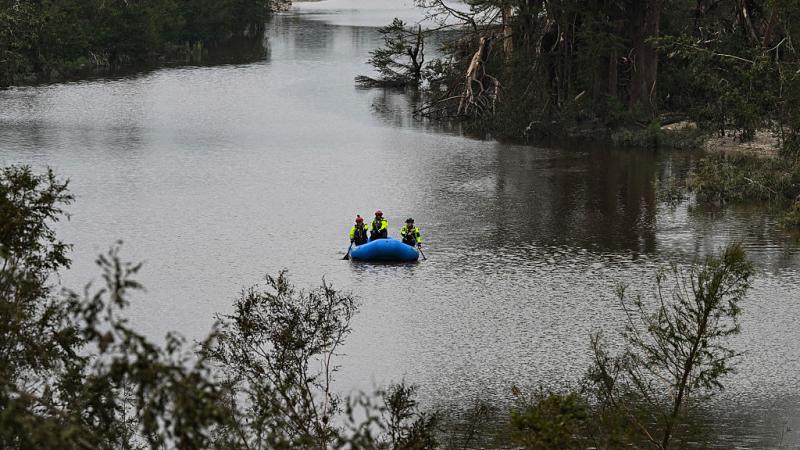
According to the report, which cites documents and testimony, Coupang was asked to hire divers to retrieve a laptop from the river where the former employee had disposed of it. The NIS has denied these claims, while Democratic Party lawmaker Park Sun-won, a member of the NIS, said on Thursday that there had been “absolutely” no coercion.
"It is shocking that the South Korean government secretly sent divers to retrieve laptops from a Chinese river by coercing Coupang," Fred Fleitz, former NSC executive secretary and vice president of the America First Policy Institute, told the Chosun Daily.
The press release accompanying the subpoena also condemned South Korea’s threats of criminal charges against Harold L. Rogers, the interim CEO of Coupang’s South Korean subsidiary, who is an American citizen.
Beyond Coupang, the House Committee report argued that South Korea has used digital regulations and competition policy to disadvantage American companies like Google, Apple, Microsoft, and Qualcomm for decades, and criticized the proposed digital platform legislation modeled after the EU’s Digital Markets Act.
The legislation, called the Online Platform Fairness Act, is spearheaded by the Korea Fair Trade Commission (KFTC) and backed by President Lee Jae-myung. South Korea's competition polices such as these could cost the U.S. $525 billion in lost economic activity over the next decade, according to a model by the Competere Foundation.
Discriminatory actions toward American companies "risk ceding ground to China," RSC chairman says
Paul Sung-won Kim, CEO of the conservative-leaning channel GROUND C based in South Korea, told Just the News that he found the Trump administration and the State Department's stance regarding the issue to be "more compelling" than the sweeping response from the Lee Jae-myung administration.
“Coupang is not the only company in Korea that leaked information. There are companies in Korea, and there are companies in China, such as Kakao Pay, which leaked information of at least 40 million people to Alipay,” Kim said. Kakao has been fined approximately $4.4 million by PIPC for the unauthorized transfer.
“From the U.S. perspective, the question is why they unfairly target American companies. I find the arguments from the Trump administration and the State Department to be more compelling," said Kim.
Earlier in April, 54 lawmakers also signed a letter to the South Korean ambassador condemning South Korea’s “discriminatory regulatory actions against American businesses” following the Coupang scandal.
“Unfortunately, the ROK recently leveraged a low-sensitivity data leak in November 2025 as a pretext to launch a whole-of-government assault on Coupang,” the letter said, highlighting how the two countries worked closely on national security issues, with 30,000 U.S. troops stationed in South Korea.
"South Korea is a critical ally, and we expect them to hold up their end of the partnership," RSC Chairman August Pfluger also said as part of the letter’s release. "Discriminatory actions against American companies undermine our economic relationship and risk ceding ground to China."
"Reciprocal tariffs" and harassment of U.S. companies
The conflict comes after the trade deal that Washington and Seoul agreed to last year in response to U.S. President Donald Trump’s “reciprocal” tariffs. South Korea pledged to invest $350 million in U.S. shipbuilding and strategic industries and scale back certain regulatory burdens in exchange for a lower tariff rate – a deal the report says South Korea has not upheld.
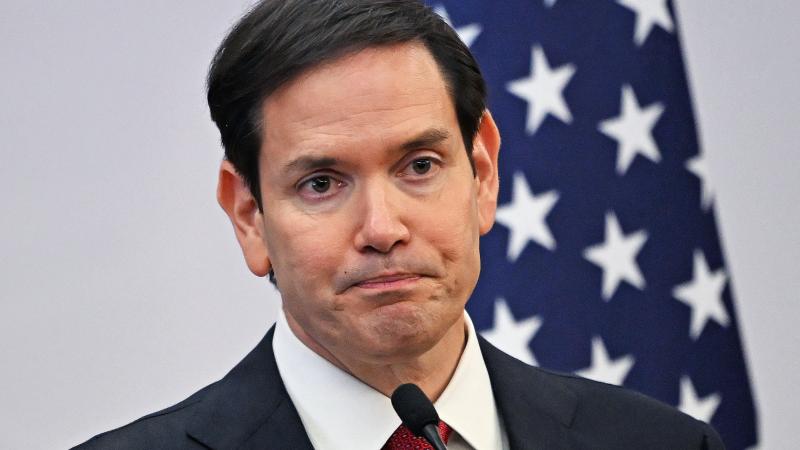
Secretary of State Marco Rubio has also publicly pledged help for the company, while Vice President JD Vance met with Prime Minister Kim Min-seok in January, warning him not to harass American companies.
Coupang said in a statement that it regretted the circumstances which led to the House Judiciary Committee investigation. The company said that it was “committed to finding a constructive resolution so Coupang can once again serve as a bridge to strengthen the U.S.-Korea alliance, accelerating trade and investment that benefits both countries.”
The Facts Inside Our Reporter's Notebook


Top Stories


Trending
Just the News Spotlight
Just News, No Noise