Related Articles
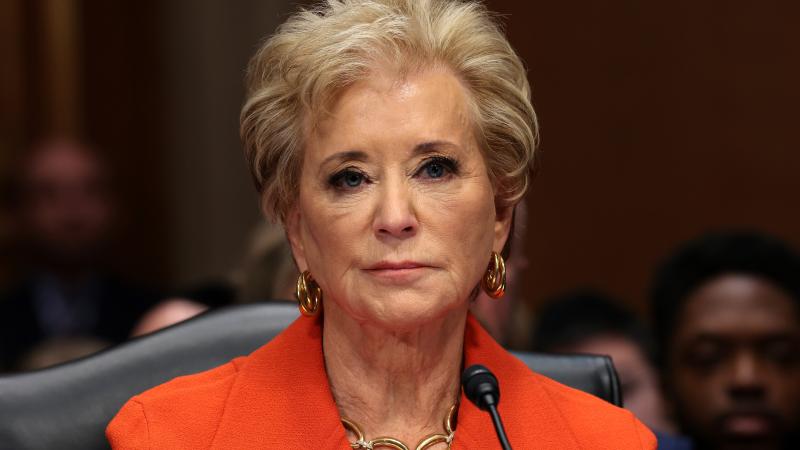

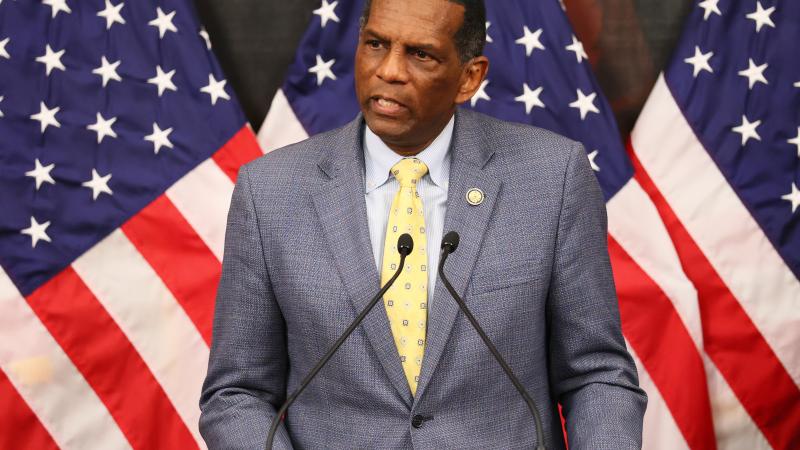

Some governments and courts have interpreted SCOTUS protections for transgender workers to mean girls' sports are open to gender-confused males, but this is a "very different statutory and factual context," girls' basketball coach Justice Kavanaugh writes.
Ever since the Supreme Court ruled against a funeral parlor for firing a male employee who presented as a woman in violation of the men's dress code, Democratic jurisdictions and some lower courts have tried to expand its reasoning from Title VII, which prohibits sex discrimination in the workplace, to Title IX, which does the same in education.
The high court rejected that connection Tuesday in a 6-3 ruling for states that limit girls' school sports to females, with the author of 2020's Bostock precedent on Title VII, Justice Neil Gorsuch, joining the majority in Tuesday's B.P.J., named after the male high school athlete who challenged West Virginia's law, Becky Pepper-Jackson.
"Title VII and Bostock are not relevant in this very different statutory and factual context of sports," and its Gorsuch-led majority explicitly limited it to Title IX, Justice Brett Kavanaugh, himself a volunteer high school girls' basketball coach when he joined SCOTUS, wrote for the majority, all six nominated by Republican presidents.
The majority again rebuffed Lindsay Hecox, the male college athlete who challenged Idaho's ban on males in girls' sports, for trying to moot the Idaho case after SCOTUS agreed to review its law alongside West Virginia's by claiming to be giving up women's sports. (Hecox's case differed from Pepper-Jackson's in that the former went through male puberty.)
"Hecox has been a student at Boise State University since 2019," trying out for the women’s Division I track and cross-country teams, "and is still enrolled there," the opinion says. The athlete went so far as telling the 9th U.S. Circuit Court of Appeals in 2022 that Hecox plans to play women's club soccer "through the remainder of my time at BSU."
Any attempt to "insulate a decision from review" after SCOTUS accepts a case is suspicious, the opinion says. "Hecox’s case is not moot."
A partial dissent penned by Justice Sonia Sotomayor, joined by fellow Democratic nominees Justices Elena Kagan and Ketanji Brown Jackson, was notable for what it didn't argue: The meaning of "sex" in Title IX includes gender identity.
Pepper-Jackson's Title IX claim fails because the Javits Amendment to Title IX and resulting regulations "instruct that this brand of sex discrimination is permissible," applying to both males without gender confusion and those like Pepper-Jackson, Sotomayor wrote. "The sexes may generally be separated" in school sports.
The ruling prompted qualified cheers from several groups and activists that oppose the use of gender identity to determine eligibility in sex-segregated sports.
"The notion that Title IX would require states to include men in women's sports has been dispelled. States should feel clearheaded protecting women's sports knowing the law is on their side," said CEO Mark Trammell of the Center for American Liberty, founded by Assistant Attorney General for Civil Rights Harmeet Dhillon.
The court concluded "the Fourteenth Amendment doesn’t block common-sense distinctions that reflect inherent male advantage in sports," Manhattan Institute director of constitutional studies Ilya Shapiro said.
But he noted that the court was silent on "whether the Constitution or federal law requires the exclusion of biological males from women’s sports, overriding state laws to the contrary," which remains for a future case.
The high court left "female student athletes vulnerable in any state that doesn’t have a law on the books that explicitly limits eligibility by sex," and it again refrained from deciding whether "transgender identity" is a constitutionally protected class, the gender-critical Women's Liberation Front said.
XX-XY Athletics founder Jennifer Sey, the 1986 U.S. Women's All-Around National Champion gymnast, cautioned that they've only "halted the retreat" and still must change laws in 23 states "where girls are still forced to compete against boys, politicians are still choosing ideology over women, and the culture that silences female athletes remains."
Case-by-case exceptions 'almost impossible' for judges to evaluate fairly
Legal scholars including George Washington University law professor John Banzhaf were quick to note the court ruled unanimously on the Title IX question, only splitting 6-3 on whether the state bans violate the Equal Protection Clause.
The crux of the dispute within the court was whether to grant states full license to reject males as a whole from girls' sports or let the West Virginia challenge continue in lower courts to determine whether males like Pepper-Jackson, who took blockers before puberty and now takes cross-sex hormones, have an inherent male athletic advantage over girls.
"Separate sports teams for biological males and biological females are reasonable: Given the inherent physical differences between the sexes, allowing only biological females to play on women’s and girls’ teams can reduce the risk of physical injury and ensure fair competition," Kavanaugh wrote for the majority.
"States are not required to conduct an individual-by-individual comparison of the physical and athletic capabilities of all biological males" to determine which can fairly compete against girls under the legal standard known as intermediate scrutiny, used to evaluate laws that classify individuals by protected characteristics such as sex, he also said.
It would likewise be "almost impossible" for a judge to equitably determine the effects of puberty blockers and cross-sex hormones taken by transgender athletes, and then compare each of their abilities to "other individual biological males and individual biological females in the relevant sport," the majority said.
West Virginia granted case-by-case exceptions "for nearly five years" before its Legislature banned males as a whole from girls' sports, based on its fear, "thus far not conclusively litigated, that transgender student-athletes categorically posed dangers to competitive fairness and safety in all girls’ and women’s sports," Sotomayor rebutted.
The Equal Protection Clause "demands much more when a State deploys a sex classification to achieve legislative aims," and by preempting the district court from resolving factual questions, the majority is "unencumbered by fact or law," she wrote. The majority responded that its analysis is "straightforward" and it won't ignore girls "forced to compete" against males.
Among the critics of Tusday's ruling was Breanna Stewart, who plays for the New York Liberty in the Women's National Basketball Association.
"My support for the transgender community is strong, and I really want to make sure that they have equal rights and access," Stewart said, according to ESPN.com. "This ruling by the Supreme Court shows that they don't, and I think it's unfair to tell a person that they can't play sports when they're just being who they are."
'Equal athletic opportunity' doesn't mean everyone gets a roster spot
Oral argument in January suggested Idaho and West Virginia would win, but justices across ideological lines still spoke in the language of gender ideology, repeatedly referring to gender-confused males as "transgender girls" and barely acknowledging the thoroughly studied sex differences between males and females relevant to athletic competition.
The first appearance of "transgender girl" and "cisgender girl" in Tuesday's ruling comes in Sotomayor's partial dissent, by contrast, and the GOP nominees repeatedly refer to biological differences that can endanger female athletes when males compete against them.
The term "sex" in Title IX, the Javits Amendment and the 1975 regulations that followed "cannot plausibly be interpreted to refer to anything other than biological sex [...] particularly in the sports context" as of the early 1970s, the majority said.
The amendment required the regulations to include "reasonable provisions considering the nature of particular sports," and "the Court must recognize the distinctiveness of competitive sports" and the "safety and competitive fairness issues" when females are "forced to compete against males," Kavanaugh wrote.
The majority noted it already rejected the argument that laws discriminate based on transgender status when they classify on the basis of biological sex, in the Skrmetti precedent allowing states to prohibit so-called gender affirming care for minors.
That would only be the case "if a school had a co-ed sports team but prohibited all transgender individuals from participating on the team," Kavanaugh wrote.
Answering Pepper-Jackson's argument that the athlete can't "compete successfully against boys," having taken blockers and cross-sex hormones, Kavanaugh emphasized Title IX regulations only guarantee "equal athletic opportunity," not that "every student [will get] a spot on a team’s roster."
Law professor Banzhaf elaborated on this point in noting the relative rarity of men's volleyball at colleges, which tend to devote limited resources to women's volleyball. Under the gender-identity reading of Title IX, the only men who would get to play volleyball at many colleges would be those who identify as women, he said.